The build_cluster convenience layer is a thin, differentiable wrapper over the
composable build_spatial_ic core: it resolves the mass spec, auto-pairs the
scale-matched equilibrium velocity DF (matched_velocity_df), and applies optional
tidal / rotation modifiers. Because the base case is proven bit-identical to the
manual composition (exact == in tests/unit/builders/test_cluster_builders.py), every
equilibrium guarantee is inherited from the already-validated profiles and DFs — this
page verifies only the new surface: that each alias builds a near-virial IC, that the
modifiers are physically correct, and that the differentiable knobs flow.
Figures: scripts/validate_cluster_builders.py (prints expected-vs-measured for every
check and exits non-zero on any failure). End-to-end equilibrium across all five profiles:
tests/integration/test_cluster_builders_integration.py. Gradient correctness: the
differentiability audit (Differentiability gradient audit) registers eight measured
AD-vs-FD cases for the builders plus a tidal straight-through teeth test.
What is verified
Each row is a PASS/FAIL check in scripts/validate_cluster_builders.py. The Tolerance
is the bound the script enforces (sys.exit(1) on any failure); the Measured value is
regenerated on every run.
Property | Tolerance (as enforced) | Measured | Anchor |
|---|---|---|---|
Virial , all 5 aliases () | 0.5000 (Plummer/King/EFF/Michie/LIMEPY) | default virial scale | |
Density recovery, sampled vs shell-weighted analytic | max rel (bins counts) | Plummer 0.072 / King 0.135 / EFF 0.128 | inherited inverse-CDF sampling |
Tidal cut: ghost mass beyond | exact 0 | 0.000 (survivor fraction 0.71) |
|
Rotation slope vs | rel err | (machine-exact) | solid-body overlay |
Differential overlay | max rel | 0.057 | peaked rotation curve |
Anisotropy vs | max dev | 0.0187 | Osipkov-Merritt matched DF |
Density recovery across the families
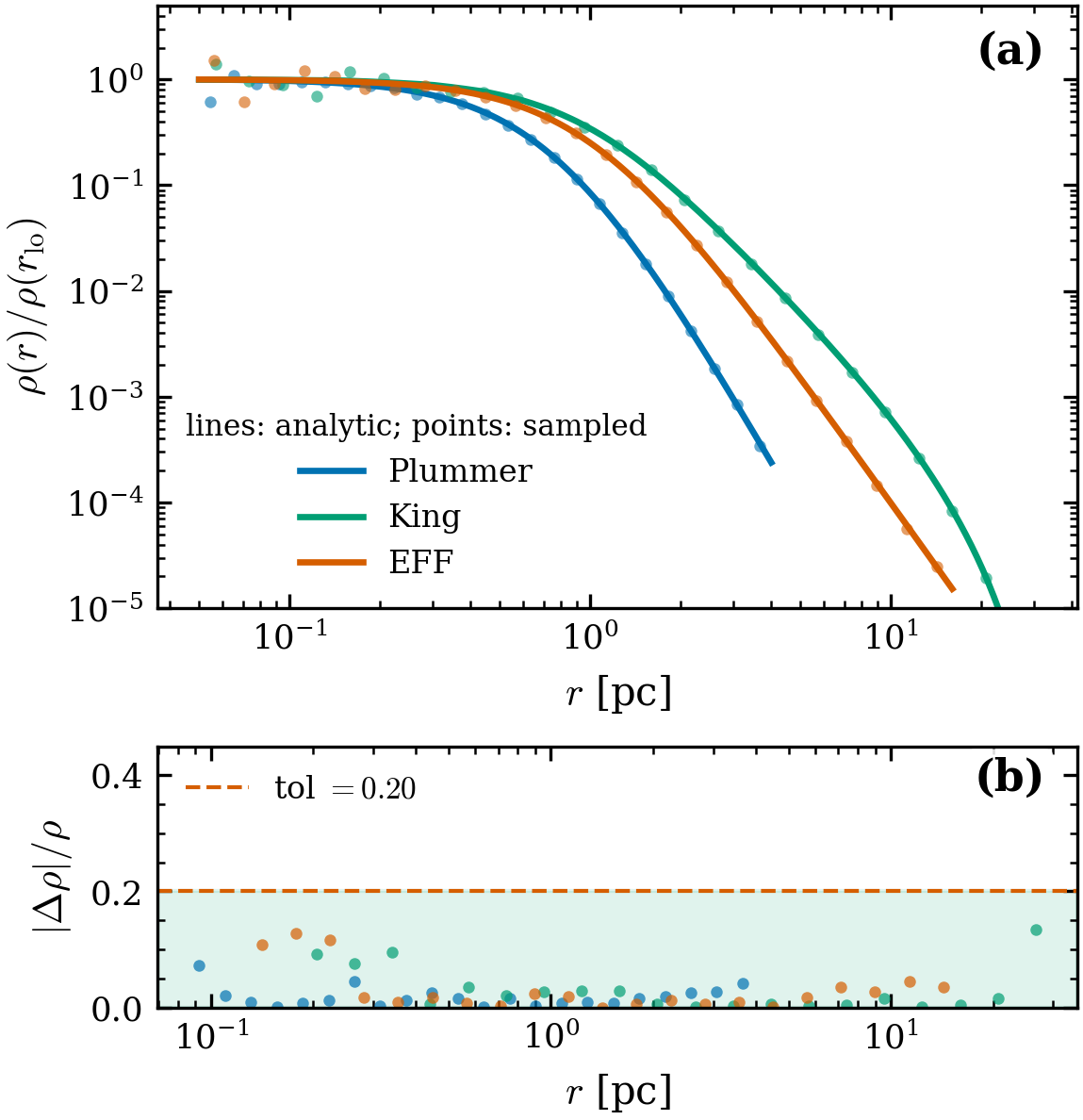
Figure 1:Sampled radial number-density (points) vs the shell-volume-weighted analytic density (lines) for Plummer, King, and EFF built through the named aliases, with a residual panel below. The convenience builder reuses each profile’s own inverse-CDF sampler, so the shape is recovered to a few percent per well-populated bin — the residual at the steep King edge is honest Poisson noise in the outermost bin, not a sampler bias.
Tidal truncation (Plummer-only)
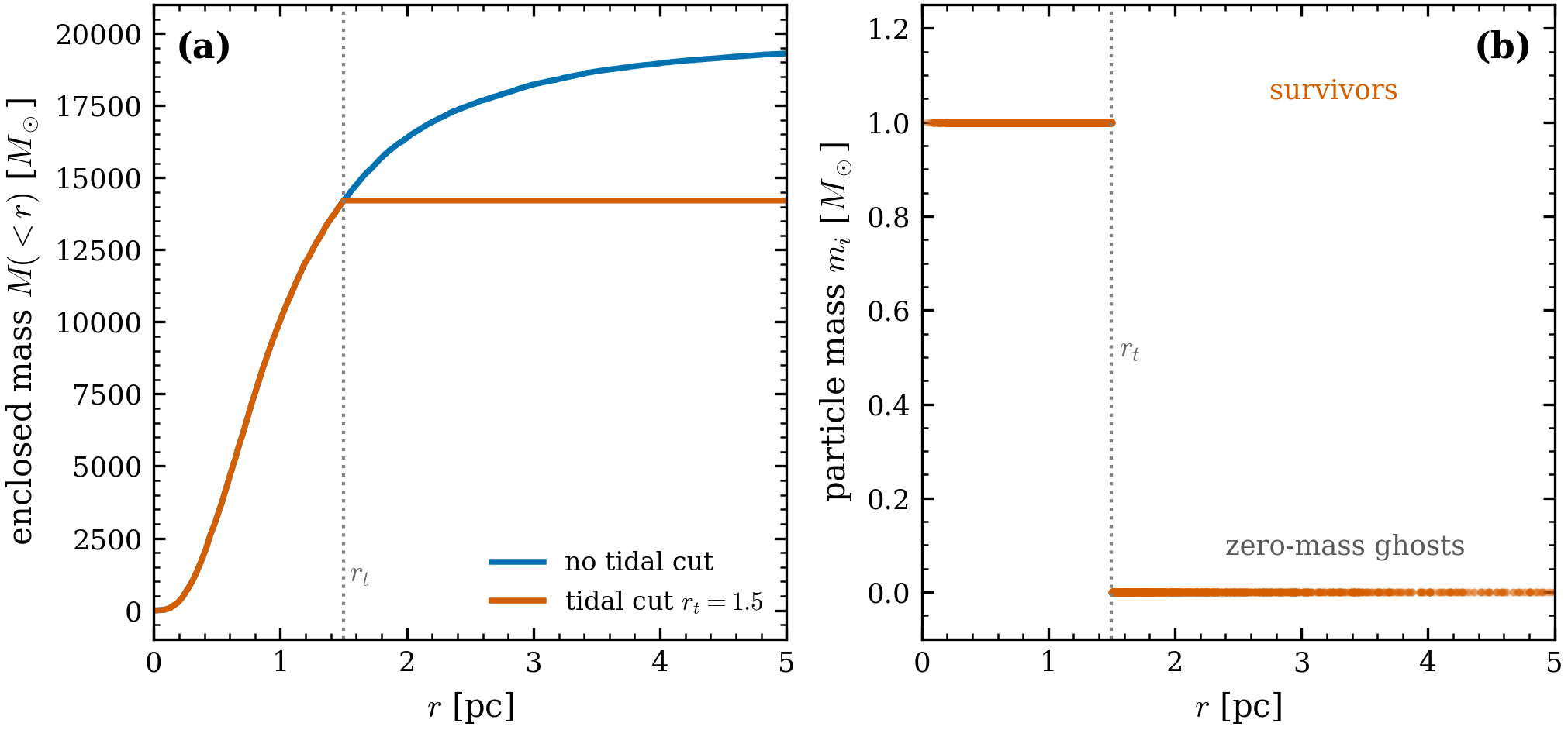
Figure 2:Radial mass profile of a Plummer build with vs without tidal_radius. The cut at
is exact (the straight-through apply_tidal_truncation forward pass is a hard
Heaviside), and the truncated stars become zero-mass ghosts beyond (fixed shape
, so the build stays jit/grad-safe). Survivors keep velocities drawn for the
untruncated potential — the set is super-virial (audit S4); use revirialize=True, or a
native- King/LIMEPY model, for a stationary truncated equilibrium.
Rotation: solid-body and differential
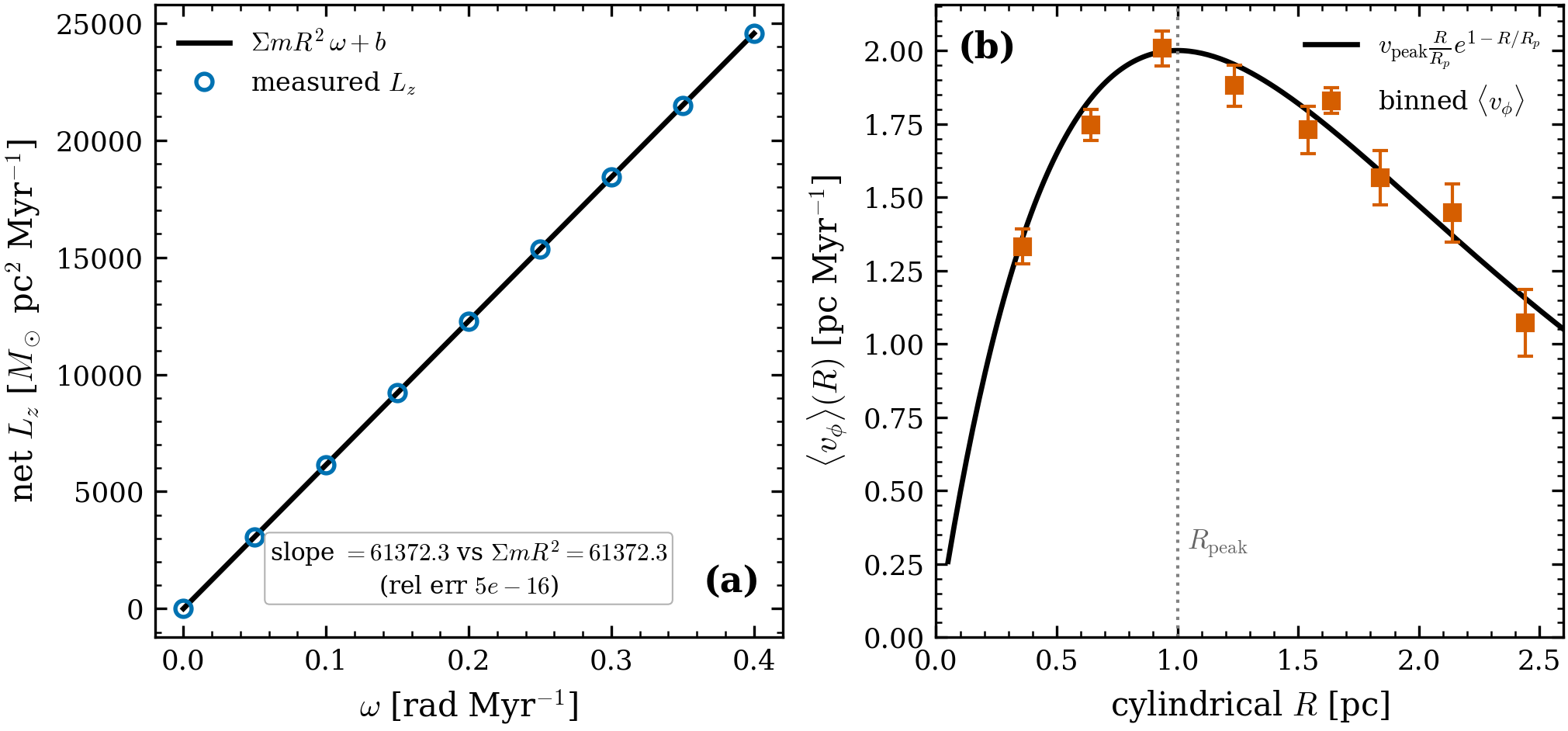
Figure 3:Left: solid-body angular momentum is exactly linear with slope
(measured to machine precision, rel err , since the
overlay leaves positions unchanged). Right: a differential RotationSpec produces a
peaked curve recovered to in the inner region. Rotation injects net
(audit S3, deliberately non-stationary).
Osipkov-Merritt anisotropy
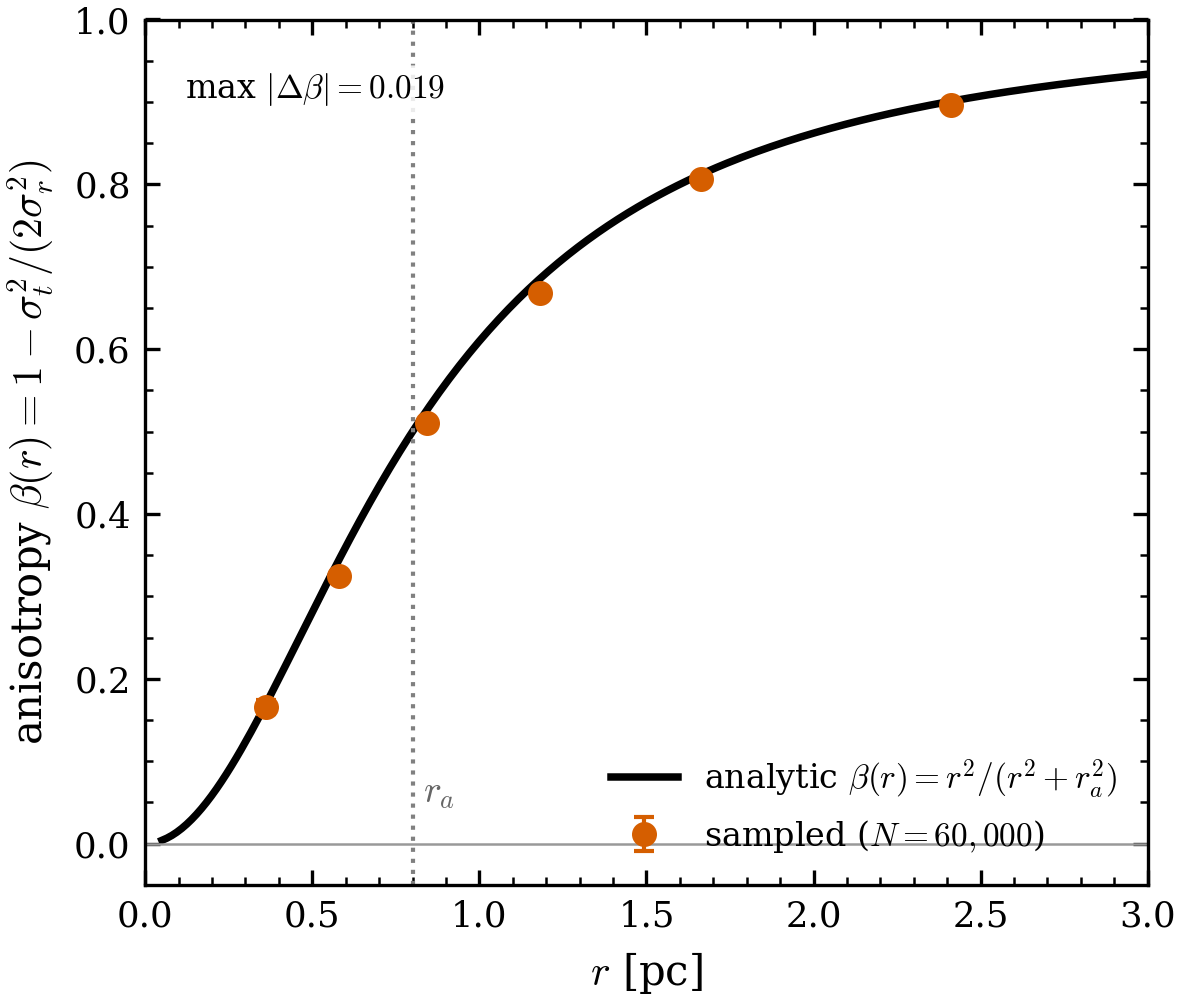
Figure 4:Measured anisotropy for a Plummer build with
anisotropy_radius set, against the analytic Osipkov-Merritt profile
(max deviation 0.019). anisotropy_radius is threaded into the
matched DF and is valid only for Plummer/EFF; King is isotropic and Michie/LIMEPY carry
their anisotropy intrinsically (set on the profile).
Differentiability
Every differentiable knob of the builder is registered in the release gradient-gate
(Differentiability gradient audit) with a measured AD-vs-FD tolerance: build_cluster
in r_h (machine-exact), anisotropy_radius, and rotation ; the per-family alias
paths (King r_c, EFF , Michie/LIMEPY W0); and build_cluster_from_params in
r_h through the ClusterParams θ-PyTree. The tidal_radius channel is a straight-through
surrogate (live but not finite-difference-consistent by design) and is covered by a
dedicated live-gradient teeth test rather than a false FD-consistent case.