Multiplicity statistics: the Moe & Di Stefano (2017) joint distribution
A practical binary-aware IMF requires knowing the joint distribution of binary parameters: the probability that a primary of mass has a companion at all, and conditional on having one, the joint distribution of mass ratio , orbital period , and eccentricity . Moe & Di Stefano (2017) compiled the most comprehensive such census to date, combining spectroscopic, eclipsing, long-baseline interferometric, adaptive-optics, and common-proper-motion samples, each carefully corrected for its own selection function. The result is the calibration progenax depends on.
This chapter unpacks two of the most consequential findings from that work — that binary properties are not universal, and that the joint distribution is not separable — then catalogues the per-mass and per-period numbers progenax stores as backing data.
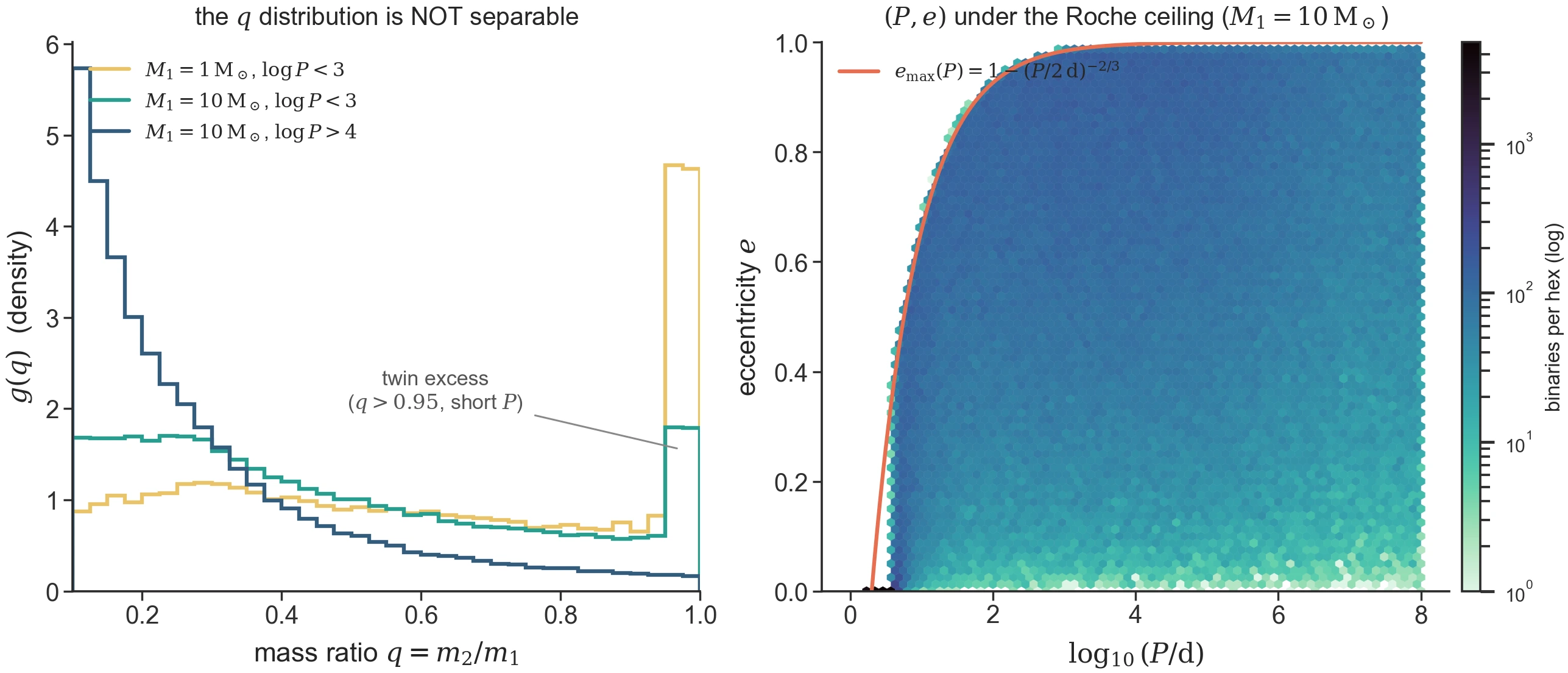
Figure 1:The Moe & Di Stefano statistics, sampled (seed 41, primaries
per ). (a) for three slices: the twin excess is a
short-period, mass-dependent feature — enormous for solar primaries, moderate
for at short , absent at long . The
distribution is not separable from . (b) the
plane under the Roche ceiling : the sampled binaries hug the
ceiling but never cross it, and the d pile is fully circularized.
Regenerate: python -m laboratory.icviz --only moe-pqe.
Two properties that complicate the naive picture
Property 1: binary properties vary systematically with primary mass. Lower-mass stars and higher-mass stars have qualitatively different binary populations. Treating “the binary fraction” as a constant (a common shortcut in earlier work) is correct on average for solar-type primaries but wrong by factors of at the mass-spectrum extremes.
Property 2: the joint distribution is not separable.
The mass-ratio distribution depends on both and ; eccentricity depends on ; companion frequency depends on both and . Treating these as independent factors introduces correlated errors that are subtle but systematic — a common pitfall in older population-synthesis work.
progenax respects this non-separability by sampling the joint from the Moe & Di Stefano (2017) piecewise fits: the master parameter set (their Table 1, Eq. 2) plus the per-mass multiplicity statistics (Table 13), the period-conditional mass-ratio slopes (Table 11), and the eccentricity slopes (Tables 10 and 12).
Terminology: companion frequency vs binary fraction
Quantity | Definition | Range |
|---|---|---|
Companion frequency | Mean number of companions per primary, per decade of , with above some threshold | , can exceed 1 |
Multiplicity frequency | Companion frequency integrated over all periods (still per primary, not per system) | , can exceed 1 (= 2.1 for O-stars) |
Binary fraction (multiplicity fraction) | Probability that a primary has at least one companion | by definition |
For O-type primaries, — the typical O-star has 2+ companions. The “binary fraction” in the sense of “probability of at least one companion” is then close to 1, while the companion frequency exceeds 2.
In simplified models (like progenax’s BinaryIMF) that allow at most
one companion per primary, the “binary fraction” is treated
as a probability — i.e. it is bounded above by 1. This is a deliberate
simplification; the implications for inferred IMF slopes are
documented at Limitations.
Mass-dependent binary fraction
```{list-table} Multiplicity fraction (; not the companion frequency ): Moe & Di Stefano (2017) Table 13 single-star row for , M-dwarf surveys below. :header-rows: 1
Primary mass
Stellar type
0.22
Very low mass / brown dwarfs
0.1–
0.26
M-dwarfs
0.5–
0.44
K/G-dwarfs
1.0–
0.50
F/A-stars
2.0–
0.60
B-stars
5–
0.80
Early B
0.90
O-stars
The trend is steep: M-dwarfs are mostly single, O-stars are almost
always in multiples. The factor-of-4 dynamic range in $f_b$ across
the mass spectrum is the leading-order reason that single-IMF
inferences from binary-rich populations are biased — see
[](binary.md) for the inference-side consequences.

```{note}
**These bins are not identical to Moe & Di Stefano's Table 13 bins.**
Table 13 quotes $f_b = 1 - \mathcal{F}_{n=0} = 0.40$ for solar-type
primaries ($0.8$–$1.2\,\Msun$) and $0.94$ for O-stars ($9$–$16\,\Msun$);
the table above lists $0.44$ at $0.5$–$1.0\,\Msun$ and $0.90$ at
$M_1 > 10\,\Msun$. The differences are a **binning** artefact, not a
disagreement: the $0.5$–$1.0\,\Msun$ bin extends *below* Table 13's
$0.8\,\Msun$ floor, where lower-fraction M-dwarf surveys fill in, and
the open-ended $M_1 > 10\,\Msun$ bin averages across O and early-B
rather than picking out Table 13's $9$–$16\,\Msun$ O-star value.
progenax samples the **Table 13 grid itself** (see
[](../../99-bibliography/per-paper/moe-distefano-2017.md)); the rows
here are a coarser pedagogical summary.
Three orbital-period regimes
Moe & Di Stefano (2017) identify three qualitatively distinct period regimes:
Regime | Period range | Properties |
|---|---|---|
Short | d | Tidally circularised orbits (). Modest mass ratios (). Small twin excess. |
Intermediate | ( AU) | Peak companion frequency. Mass ratios weighted toward small values (–0.3). Thermal eccentricity distribution . |
Long | –7.5 (–5000 AU) | Outer tertiary components in hierarchical triples. Mass-ratio distribution nearly consistent with random pairings drawn from the IMF. |
The three regimes have distinct mass-ratio distributions, which is
the source of the period-conditional structure in .
progenax’s default BinaryIMF uses period-averaged mass-ratio
parameters reduced from Moe & Di Stefano (2017) Table 13; surveys sensitive to a
specific period range (spectroscopic = short-period, visual = wide)
need a full period-conditional likelihood layer. That layer is
described conceptually in Mass-ratio distributions, but the
current BinaryIMF does not export a with_period_conditional()
constructor.
How the calibration was derived
Moe & Di Stefano (2017) analysed dozens of binary samples, each spanning a narrow interval of and . For each sample they:
Identified the relevant selection function of the survey technique (spectroscopic surveys are biased toward large and short ; visual surveys are biased toward wide separations).
Corrected for incompleteness using the known selection function of each technique.
Fit the intrinsic mass-ratio distribution as a power-law plus twin excess (see Mass-ratio distributions).
Identified a contamination rate from white-dwarf companions masquerading as main-sequence binaries in spectroscopic samples, and corrected for it.
The resulting joint is the closest thing the field
has to a “ground truth” binary-population calibration. progenax encodes
the Table 13 grids in progenax.imf.MoeDiStefano2017 (and the faithful
period-dependent MoeDiStefano2017Full / MoeJointOrbit in
progenax.imf.binary), and exposes the mass-dependent multiplicity
fraction through MassDependentBinaryFraction and the higher-level
BinaryIMF API.
Solar-mass calibration and the twin excess
For solar-type primaries (0.8–), the twin fraction is the highest in the mass spectrum. The twin excess is a narrow peak in near with width , sitting on top of the power-law background. Solar-type primaries therefore have two distinct populations of binaries: the bulk power-law and a excess of near-equal-mass twins. The relative weights shift across the mass spectrum:
Primary mass | Behaviour | |
|---|---|---|
0.05 | Modest twin excess | |
0.8– | 0.10 | Peak — solar-type strongest twin signature |
1.2– | 0.08 | Slightly lower |
0.03 | Massive stars rarely twin |
The full form combining the power law and twin excess is documented in Mass-ratio distributions.
Higher-order multiples
progenax’s default BinaryIMF model caps at one companion per
primary. Real populations include triples, quadruples, and higher:
of solar-type systems are triples, rising to for
O-type Moe & Di Stefano, 2017Sana et al., 2012. The single-companion approximation
underestimates the high-mass distortion (a triple with masses
inflates the system mass more than the binary
). For O-star-dominated populations this is a substantial
effect; for solar-type-dominated populations it is a small correction.
The architectural extension to triples is straightforward — replace the single with a Poisson-companion model — but is deferred to a future progenax version.
Check yourself
1. Where does the twin spike live?
Before studying Figure 1(a): which of the three slices carries the strongest excess — solar short-, massive short-, or massive long-? Rank them, then check. (Twins are a short-period phenomenon, strongest for low-mass primaries.)
2. Measure the twin fraction
Sample MoeCompanions() on 105 solar primaries, select
, and compute the excess fraction of binaries
over . Compare with the Table-13 anchor for that bin (see the
per-paper note).
Implementation, validation & references
In code: the joint statistics live in
src/progenax/imf/binary/moe_di_stefano.py(MoeDiStefano2017,MoeDiStefano2017Full) and the mass-dependent multiplicity insrc/progenax/imf/binary/binary_fraction.py(MassDependentBinaryFraction) — see the IMF API.Validated in: IMF statistics and binary-aware recovery, which exercise the Table 13 grids and the binary-fraction trend.
Primary sources: Moe & Di Stefano (2017) (the comprehensive joint-distribution census), Sana et al. (2012) (foundational massive-star multiplicity), and Moe et al. (2019) (metallicity dependence) — full notes in the bibliography. The period-distribution side is documented at Binary period distributions; the mass-ratio side at Mass-ratio distributions.
- Moe, M., & Di Stefano, R. (2017). Mind your Ps and Qs: The interrelation between period (P) and mass-ratio (Q) distributions of binary stars. The Astrophysical Journal Supplement Series, 230, 15. 10.3847/1538-4365/aa6fb6
- Sana, H., de Mink, S. E., de Koter, A., Langer, N., Evans, C. J., Gieles, M., Gosset, E., Izzard, R. G., Le Bouquin, J.-B., & Schneider, F. R. N. (2012). Binary interaction dominates the evolution of massive stars. Science, 337, 444–446. 10.1126/science.1223344
- Moe, M., Kratter, K. M., & Badenes, C. (2019). The close binary fraction of solar-type stars is strongly anticorrelated with metallicity. The Astrophysical Journal, 875, 61. 10.3847/1538-4357/ab0d88